MENU

Sections

  • Home
  • About
    • The Chestertown Spy
    • Contact Us
    • Advertising & Underwriting
      • Advertising Terms & Conditions
    • Editors & Writers
    • Dedication & Acknowledgements
    • Code of Ethics
    • Chestertown Spy Terms of Service
    • Technical FAQ
    • Privacy
  • The Arts and Design
  • Local Life and Culture
  • Public Affairs
    • Ecosystem
    • Education
    • Health
  • Community Opinion
  • Donate to the Chestertown Spy
  • Free Subscription
  • Talbot Spy
  • Cambridge Spy

More

  • Support the Spy
  • About Spy Community Media
  • Advertising with the Spy
  • Subscribe
November 14, 2026

ARCHIVE Chestertown Spy

Nonpartisan and Education-based News for Chestertown

  • << RETURN TO CHESTERTOWN SPY
  • << RETURN TO CHESTERTOWN SPY
00 Post to Chestertown Spy Food and Garden Notes

Adkins Arboretum Mystery Monday: Guess the Photo!

November 24, 2025 by Adkins Arboretum Leave a Comment

Happy Mystery Monday! Can you guess what is pictured in photo #1?


The answer to last week’s mystery is the river birch, Betula nigra, pictured in photo #2.
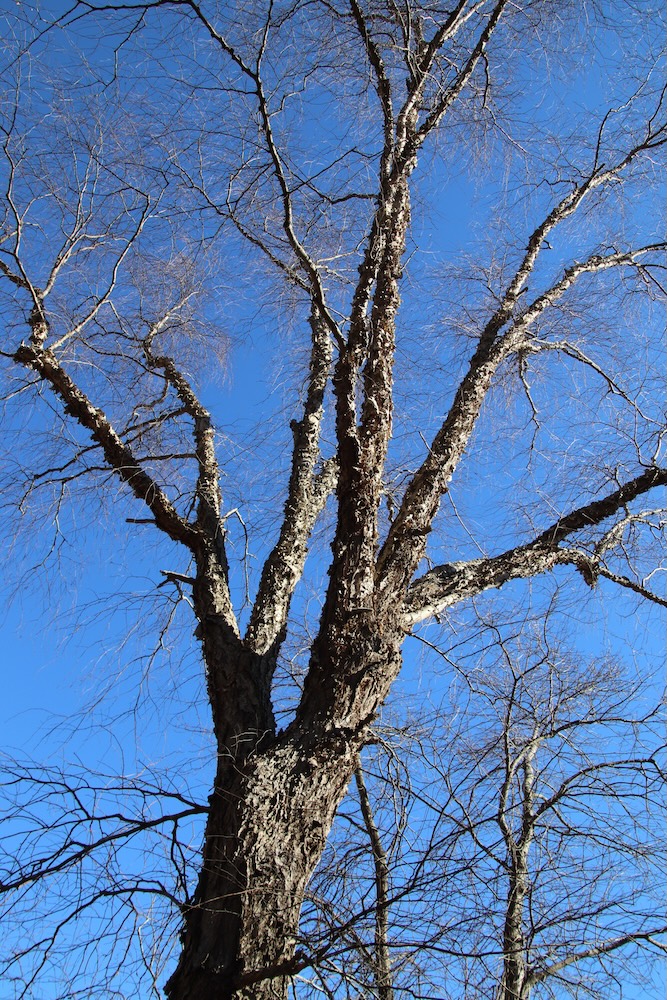
Found across the eastern and central United States, the river birch, Betula nigra, is the southernmost of all native birches, and the only one that naturally grows at low elevations. Its shimmering, peeling bark is one of its most recognizable features. This exfoliation is a natural process that helps the tree shed pests, disease organisms, and other hitchhikers like lichens, mosses, and fungi.

More heat-tolerant and disease-resistant than any other birch, the river birch thrives along streambanks, floodplains, and other moist sites where it helps stabilize soil and reduce erosion. In exceptionally dry conditions, river birch may drop some of its leaves as a water-saving strategy. In cultivation, it can be trained as a single trunk or a multi-trunked specimen—both forms showing off that distinctive bark.

The river birch is also notable for what it doesn’t suffer from: it’s the only North American birch naturally resistant to the destructive bronze birch borer. However, it is a “bleeder,” and pruning or accidental wounds cause sap to flow freely, attracting insects, some of which become stuck in the sticky drips. Late Spring flowering rounds out the appeal of this adaptable, resilient native tree.

Mystery Monday is sponsored by the Spy Newspapers and Adkins Arboretum.

The Spy Newspapers may periodically employ the assistance of artificial intelligence (AI) to enhance the clarity and accuracy of our content.

Filed Under: 00 Post to Chestertown Spy, Food and Garden Notes

Adkins Arboretum Mystery Monday: Guess the Photo!

October 20, 2025 by Adkins Arboretum

Happy Mystery Monday! Can you guess what is pictured in photo #1?

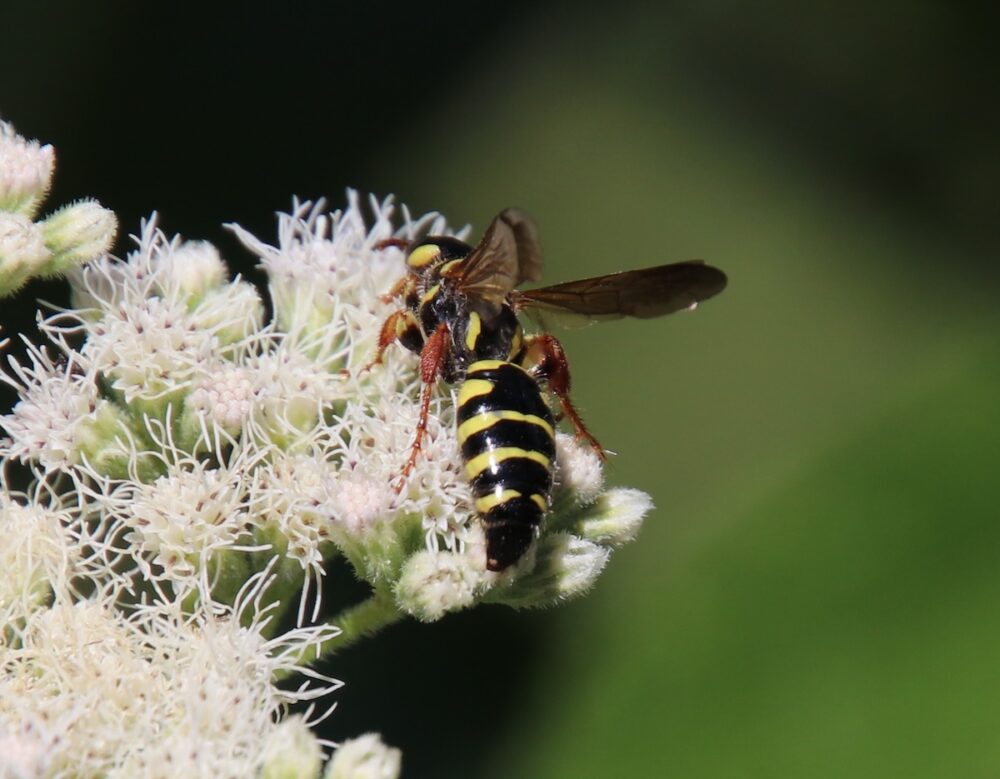
The answer to last week’s mystery is the five-banded thynnid wasp, Myzinum quinquecinctum, pictured in photo #2.

The five-banded thynnid wasp, Myzinum quinquecinctum, is a solitary, late-Summer visitor to flowers across its range. With striking black and yellow bands, these wasps are often mistaken for yellowjackets—a helpful disguise that protects them from predators. Only the females can sting, and even then, they are virtually harmless unless handled.

Unlike social wasps, thynnids do not defend a hive. Females hunt larval scarab beetles, including Japanese beetles and May/June beetles. They use their stinger to paralyze their prey and, instead of dragging their prey away, they instead lay eggs on them where they are found. The males are slender and are often seen congregating on a single plant while the females focus on hunting.

During this time of year, their diet shifts from protein to carbohydrates (sugars), feeding on flower nectar. By preying on pest beetle larvae and visiting blooms for nectar, five-banded thynnid wasps play a quietly important role in our gardens and natural landscapes.

Mystery Monday is sponsored by the Spy Newspapers and Adkins Arboretum.
The Spy Newspapers may periodically employ the assistance of artificial intelligence (AI) to enhance the clarity and accuracy of our content.

Filed Under: Food and Garden Notes

Adkins Arboretum Mystery Monday: Guess the Photo!

October 13, 2025 by Adkins Arboretum

Happy Mystery Monday! Can you guess what is pictured in photo #1?

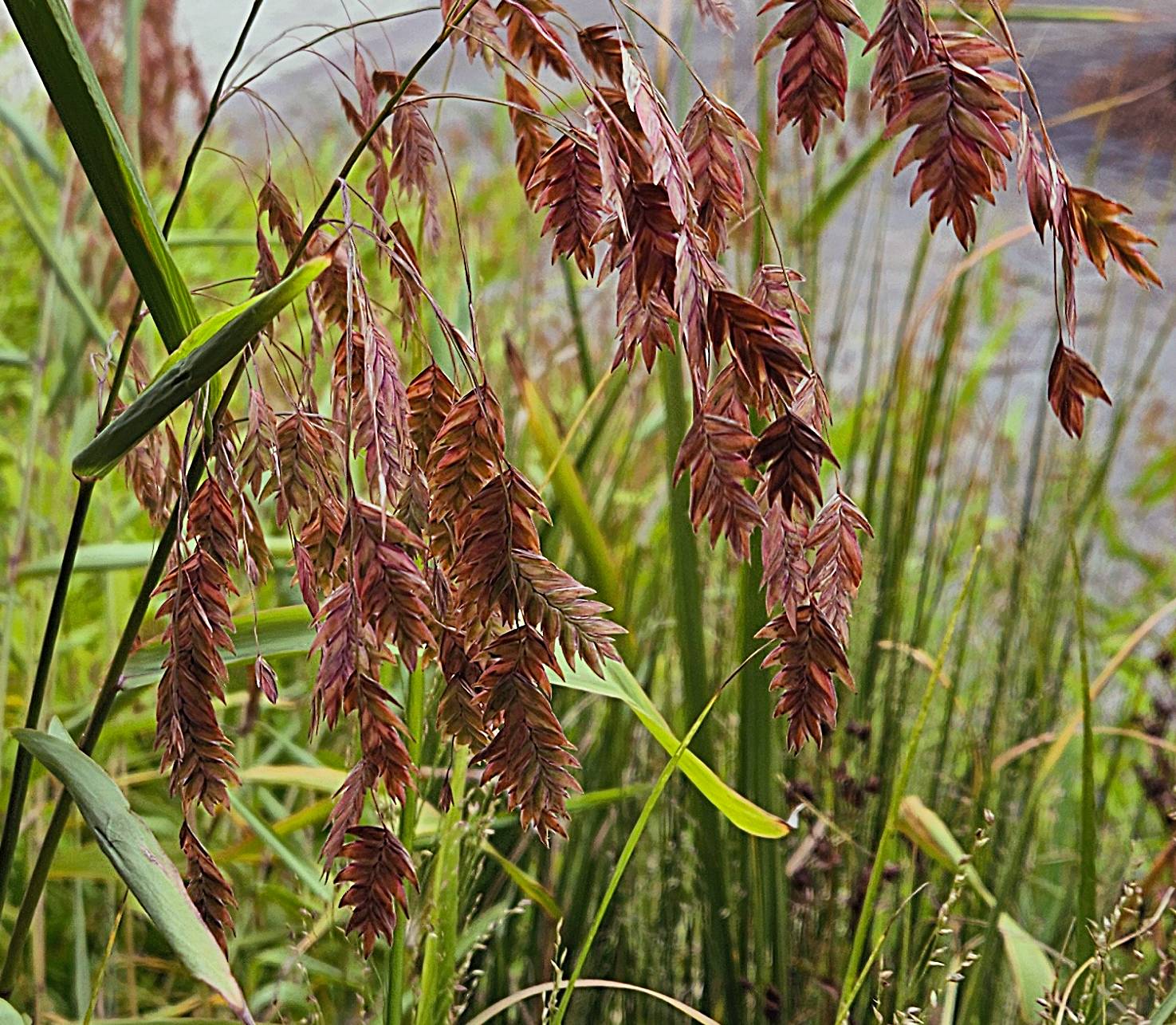
The answer to last week’s mystery is Northern sea oats, Chasmanthium latifolium, pictured in photo #2.

Northern sea oats, Chasmanthium latifolium, also known as river oats, is a native grass found along streams and woodland edges in the eastern United States and northern Mexico. Growing in clumps 2–5′ tall, it spreads slowly by rhizomes and seed, thriving even in the shade of black walnut trees—something few other ornamental grasses can tolerate.

Its flat, oat-like seed heads dangle on slender stems, catching the light and fluttering with the slightest breeze. As the seasons change, the foliage shifts from green to copper with hints of purple in Fall, before fading to paper bag brown in Winter, when the sturdy stems continue to stand. The persistent seed heads not only add beauty to Winter landscapes and dried arrangements but also provide food for birds and small mammals.

Hardy to –30°F, deer-resistant, and ecologically valuable, northern sea oats serve as a larval host for the northern pearly-eye butterfly, Lethe anthedon, while offering year-round interest to both wildlife and gardens.

Mystery Monday is sponsored by the Spy Newspapers and Adkins Arboretum.

The Spy Newspapers may periodically employ the assistance of artificial intelligence (AI) to enhance the clarity and accuracy of our content.

Filed Under: Food and Garden Notes

Adkins Arboretum Mystery Monday: Guess the Photo!

October 6, 2025 by Adkins Arboretum

Happy Mystery Monday! Can you guess what is pictured in photo #1?

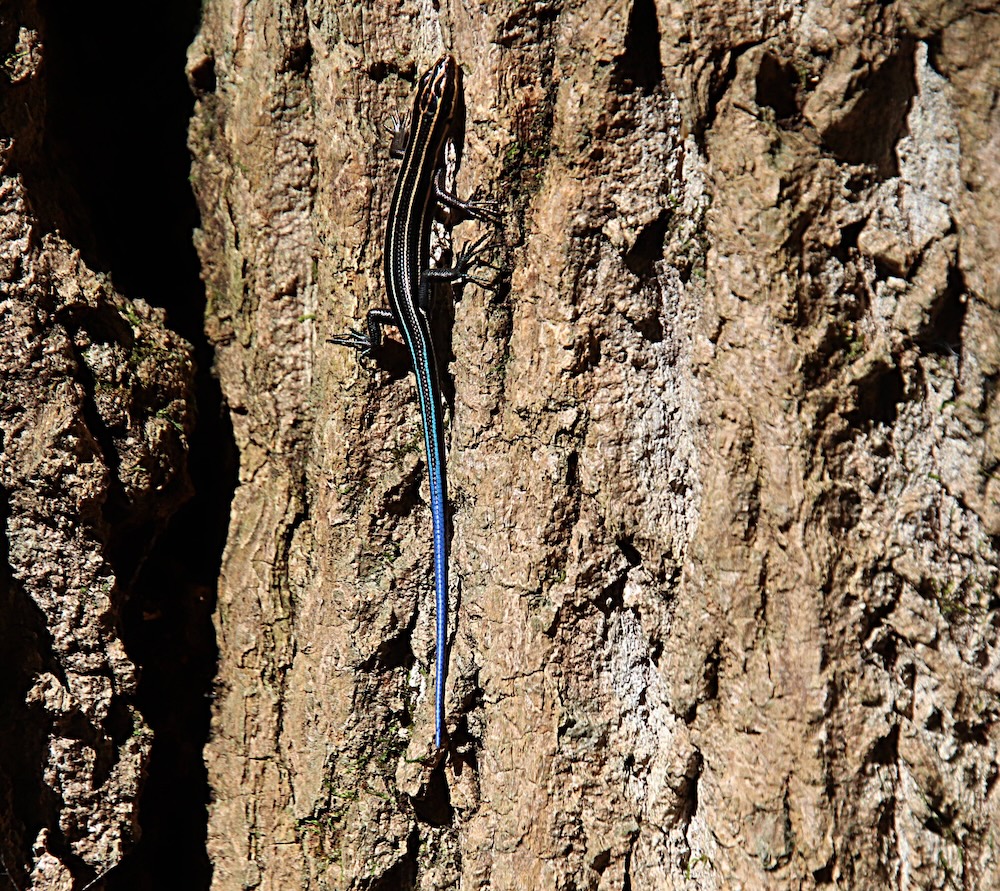
The answer to last week’s mystery is the American five-lined skink, Plestiodon fasciatus, pictured in photo #2.

The American five-lined skink is a familiar backyard reptile found throughout Maryland, especially on the Coastal Plain. (Note: The blue-tailed skink is from Australia, and the five-lined skink is African. This species is specifically the American five-lined skink.) Juveniles are easy to recognize with their glossy black bodies, five pale stripes, and brilliant blue tails. Adult males lose much of this coloring and become olive or tan with vivid red-orange jaws during breeding season, often being confused with the broad-headed skink, Plestiodon laticeps, a closely related species with which it shares habitat.

These lizards prefer moist but not wet woodlands and are often seen foraging on logs, porches, and even in trees. On sunny days, they bask briefly before darting back to cover. If threatened, they can drop their tails, which continue to wriggle and distract predators while the skink escapes; a new tail will eventually grow back. The bright blue tail not only draws predators away from the head but also warns of the skink’s toxicity if eaten.

Females lay 15–18 eggs in secluded spots beneath rotting logs or boards from May to July. They demonstrate a high level of parental care, and curl protectively around their clutch until hatching. In some communal nests females are known to alternate foraging and guarding of the eggs; this also allows them to warm the eggs by basking in the sun before returning. After hatching, the young soon leave the nest to fend for themselves and become sexually mature in two or three years. They feed primarily on invertebrates such as insects and spiders. Common five-lined skinks can live up to six years and remain one of the most common and fascinating reptiles of our backyards.

Mystery Monday is sponsored by the Spy Newspapers and Adkins Arboretum.
The Spy Newspapers may periodically employ the assistance of artificial intelligence (AI) to enhance the clarity and accuracy of our content.

Filed Under: Food and Garden Notes

Adkins Arboretum Mystery Monday: Guess the Photo!

September 29, 2025 by Adkins Arboretum

Happy Mystery Monday! Can you guess what is pictured in photo #1?

The answer to last week’s mystery is field thistle, Cirsium discolor, pictured in photo #2.

Field thistle, Cirsium discolor, a native member of the aster family, is found in meadows and forest edges throughout the eastern United States. This biennial herb can grow more than 7′ tall, making a bold statement in the landscape. Its leaves are white and woolly underneath, and deeply lobed, helping distinguish it from the similar tall thistle, Cirsium altissimum, which has shallowly lobed leaves.

Blooming from June through October, field thistle produces large heads containing over a hundred pink to purple disk flowers. These blooms are ecologically rich, providing nectar for bees, wasps, flies, beetles, moths, and even hummingbirds. It is also a larval host for the painted lady butterfly. By late summer and fall, its high-protein seeds become critical forage for goldfinches and other seed-eating birds, while the downy thistledown is used by small birds to line their nests.

Despite being confused with invasive thistles, our native species are vital to wildlife. Their nectar, seeds, and even hollow stalks support pollinators, birds, and nesting bees, making field thistle an ecologically powerful plant well worth celebrating.

Mystery Monday is sponsored by the Spy Newspapers and Adkins Arboretum.

The Spy Newspapers may periodically employ the assistance of artificial intelligence (AI) to enhance the clarity and accuracy of our content.

Filed Under: Food and Garden Notes

  • 1
  • 2
  • 3
  • …
  • 114
  • Next Page »

Copyright © 2026

Affiliated News

  • The Cambridge Spy
  • The Talbot Spy

Sections

  • Arts
  • Culture
  • Ecosystem
  • Education
  • Health
  • Local Life and Culture
  • Spy Senior Nation

Spy Community Media

  • About
  • Subscribe
  • Contact Us
  • Advertising & Underwriting

Copyright © 2026 · Spy Community Media Child Theme on Genesis Framework · WordPress · Log in