
MENU

Sections

  • Home
  • About
    • The Chestertown Spy
    • Contact Us
    • Advertising & Underwriting
      • Advertising Terms & Conditions
    • Editors & Writers
    • Dedication & Acknowledgements
    • Code of Ethics
    • Chestertown Spy Terms of Service
    • Technical FAQ
    • Privacy
  • The Arts and Design
  • Local Life and Culture
  • Public Affairs
    • Ecosystem
    • Education
    • Health
  • Community Opinion
  • Donate to the Chestertown Spy
  • Free Subscription
  • Talbot Spy
  • Cambridge Spy

More

  • Support the Spy
  • About Spy Community Media
  • Advertising with the Spy
  • Subscribe
October 14, 2026

ARCHIVE Chestertown Spy

Nonpartisan and Education-based News for Chestertown

  • << RETURN TO CHESTERTOWN SPY
  • << RETURN TO CHESTERTOWN SPY
00 Post to Chestertown Spy Food and Garden Notes

Adkins Arboretum Mystery Monday: Guess the Photo!

November 24, 2025 by Adkins Arboretum Leave a Comment

Happy Mystery Monday! Can you guess what is pictured in photo #1?


The answer to last week’s mystery is the river birch, Betula nigra, pictured in photo #2.
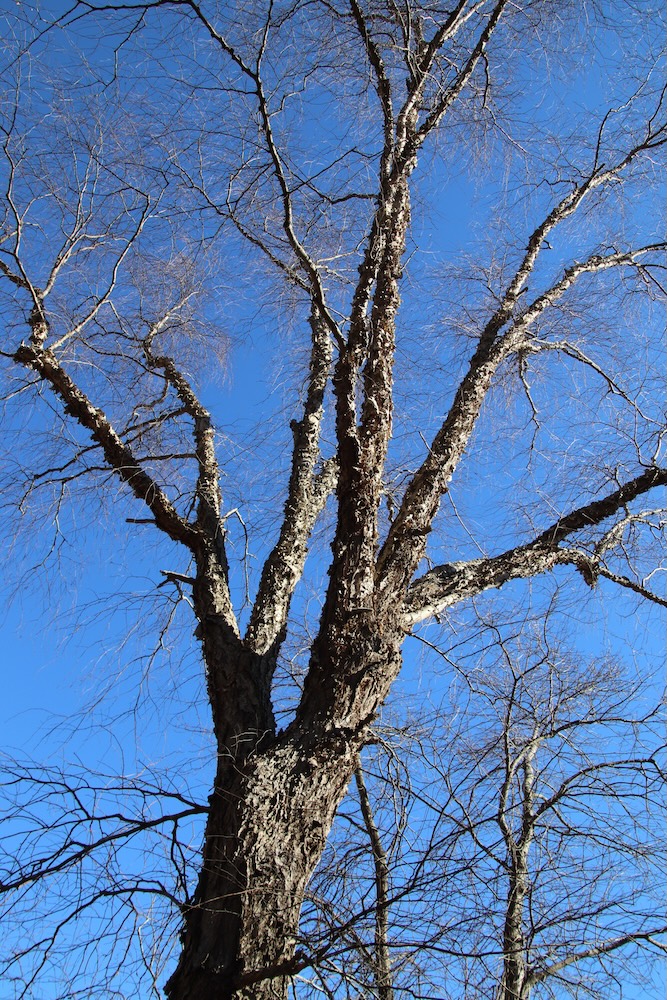
Found across the eastern and central United States, the river birch, Betula nigra, is the southernmost of all native birches, and the only one that naturally grows at low elevations. Its shimmering, peeling bark is one of its most recognizable features. This exfoliation is a natural process that helps the tree shed pests, disease organisms, and other hitchhikers like lichens, mosses, and fungi.

More heat-tolerant and disease-resistant than any other birch, the river birch thrives along streambanks, floodplains, and other moist sites where it helps stabilize soil and reduce erosion. In exceptionally dry conditions, river birch may drop some of its leaves as a water-saving strategy. In cultivation, it can be trained as a single trunk or a multi-trunked specimen—both forms showing off that distinctive bark.

The river birch is also notable for what it doesn’t suffer from: it’s the only North American birch naturally resistant to the destructive bronze birch borer. However, it is a “bleeder,” and pruning or accidental wounds cause sap to flow freely, attracting insects, some of which become stuck in the sticky drips. Late Spring flowering rounds out the appeal of this adaptable, resilient native tree.

Mystery Monday is sponsored by the Spy Newspapers and Adkins Arboretum.

The Spy Newspapers may periodically employ the assistance of artificial intelligence (AI) to enhance the clarity and accuracy of our content.

Filed Under: 00 Post to Chestertown Spy, Food and Garden Notes

Oxford’s Dan Weiss Becomes New Director of Philadelphia Museum of Art A Local Odyssey: One Woman’s Life with Breast Cancer – Part 2

Leave a Reply Cancel reply

Your email address will not be published. Required fields are marked *

Copyright © 2026

Affiliated News

  • The Cambridge Spy
  • The Talbot Spy

Sections

  • Arts
  • Culture
  • Ecosystem
  • Education
  • Health
  • Local Life and Culture
  • Spy Senior Nation

Spy Community Media

  • About
  • Subscribe
  • Contact Us
  • Advertising & Underwriting

Copyright © 2026 · Spy Community Media Child Theme on Genesis Framework · WordPress · Log in